How to increase restaurant bookings
To increase bookings, follow seven steps: make booking easy, take bookings around the clock, fill your quiet slots, cut the number of no-shows, turn tables faster, ask for the booking, and get the guest to book again.
- Book around the clock
- 0 commission on your own bookings
- Same guest profile as loyalty
To increase restaurant bookings, make a table easy to book, take bookings around the clock and fill the quiet slots. Then cut the number of no-shows, turn tables faster, ask every guest for the next booking, and bring guests back — seven steps you run from one booking system.
- Easy to book
- Around the clock
- Fill quiet slots
- Fewer no-shows
- Turn tables
- Ask for it
- Rebook
More booked tables in seven steps
This guide walks you through seven steps that put more tables on the book. Each step is one concrete thing you do, in order, and it works whatever system you run today.
- 1
Make booking easy
Put a booking button where the guest already is: on your site, your Google profile and your Instagram link. Ask only for party size, date, time and a name — every extra question loses guests.
- 2
Take bookings around the clock
Let the guest book any time, including when you're closed. Show open times automatically from your tables and sittings, and confirm the booking on the spot so the guest knows it's set.
- 3
Fill your quiet slots
Aim offers at the times that sit empty, not the ones already full. Send an offer valid only on the quiet slots to guests already in your guest database.
- 4
Cut the number of no-shows
A booked table that sits empty is a lost booking. A confirmation the moment they book and a reminder before the visit with a link to cancel cut no-shows. Deposit rules on the riskiest slots are coming next.
- 5
Turn tables faster
More sittings a night mean more bookings you can take. Set a hold time per party and seat parties at the right table so no four-top is blocked by two guests.
- 6
Ask for the booking
Tell the guest where and when they can book. Put a “Book a table” button first on the site, in the menu and in your email signature — and ask for the next booking with the bill, while the guest is happy.
- 7
Get the guest to book again
A returning guest is cheaper than a new one. Save every guest in a guest profile, send an offer to guests who haven't booked in a while, and reward repeat visits with a digital stamp card.
Step 1 in practice: this is how easy booking should be
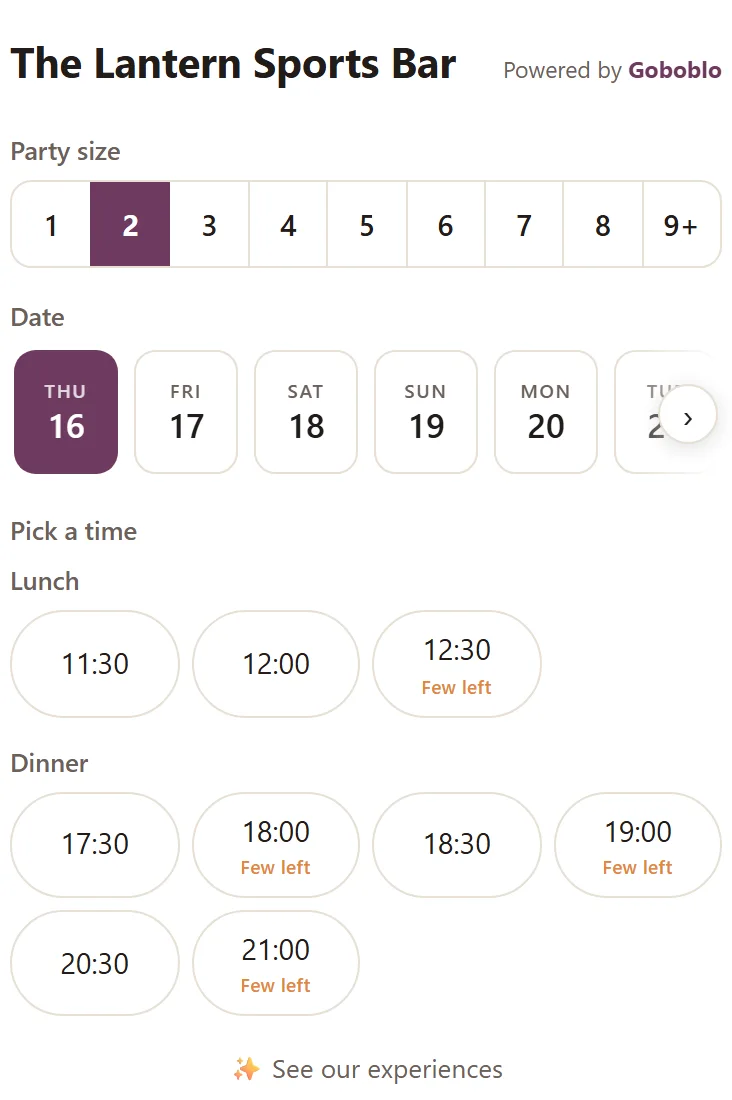
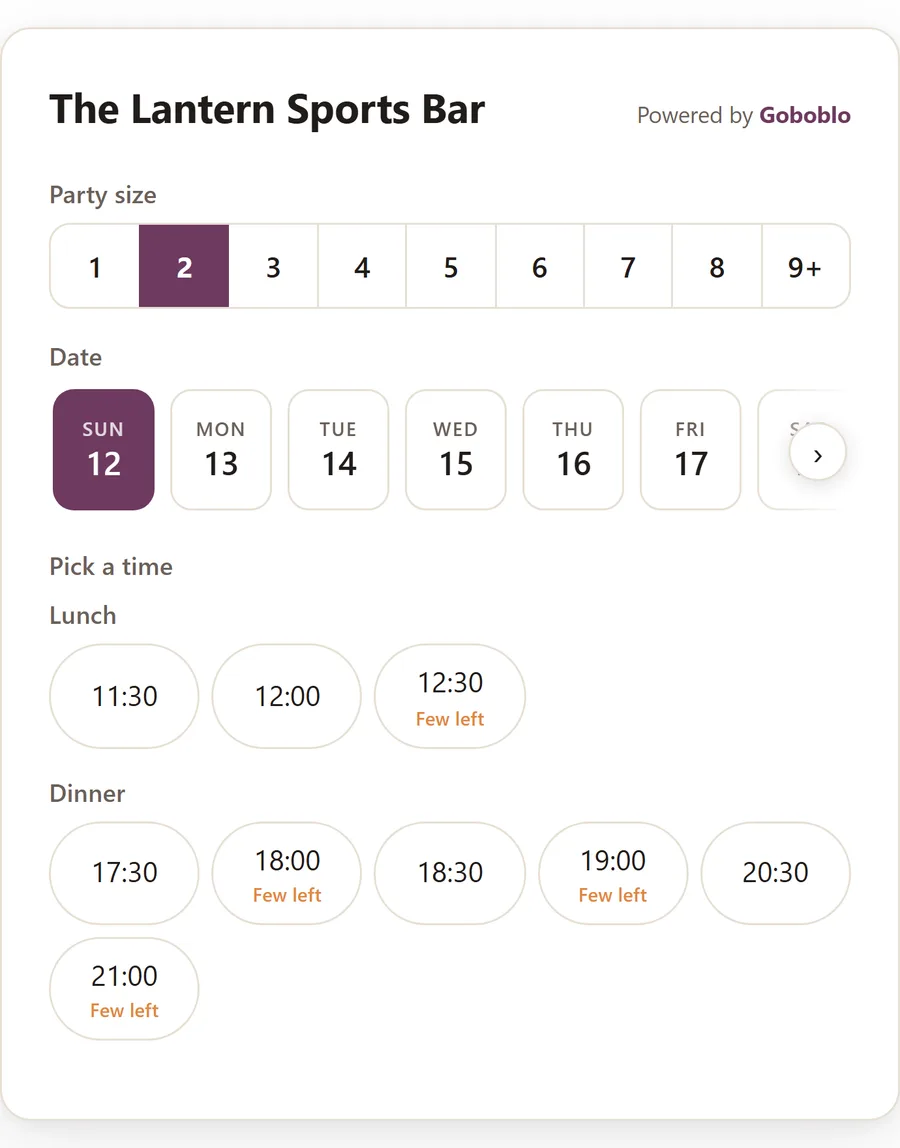
The guide's first step is making booking easy — try for yourself how easy it should be. This is the widget with the demo venue's real times: three taps from a time to confirmed, around the clock.
- The guest picks a party size, a date and an open time — times that are filling up are marked Few left.
- The guest fills in a name and one way to reach them on the details step — and can pick a table or join the waitlist where it fits.
- Confirm booking: the guest gets Booking confirmed! with a calendar file and a manage link to change or cancel on their own.
- The booking sits in your system the same second — with a guest profile, and nobody picked up a phone.
Thu 16 July · · 2 guests
Filled in for you in the demo — the guest types their own.
See you soon! A confirmation is sent to your contact details.
- The booking landed in your booking system the same second — in the calendar and on the floor, no phone.
- The guest got a confirmation with a calendar file and a manage link — they change or cancel on their own, in four languages.
- A guest profile was created — next time you recognize Emma, and the booking counts toward her history.
Catch the booking the moment the guest decides
A booking widget is a small form you add to your site where the guest picks a party size, day and time and books themselves. Fewer clicks mean more bookings. Show open times straight away — the guest should see a time to click, not an empty field.
- Booking button on the home page, the menu and the Google profile
- Ask only for party size, date, time and name first
- Take bookings outside opening hours too
Move guests into the quiet slots
Friday and Saturday sell out while Tuesday and Wednesday sit half empty. Moving guests into the quiet slots grows your bookings without needing more guests. Weekday lunch is the easiest slot to fill.
- Find your empty slots — look at occupancy by day and service
- Send an offer valid only on the quiet slots
- Send it to guests you already have, not to new ones you pay to reach
Fill more of the tables you already booked
A no-show is a guest who books but never arrives and never cancels. Two things cut them now: a confirmation the moment they book and a reminder before the visit — with deposit rules on the riskiest slots coming next. Then set a hold time per party so the next booking fits.
- A confirmation the moment they book and a reminder before the visit
- Deposit rules on large parties and sold-out nights (coming next)
- A hold time per party so the next booking fits
Ask for the next booking while the guest is happy
A guest who is never asked rarely books. A clear prompt in the right place grows bookings without spending more on reach. And a guest you've already had is cheaper to bring back — save them in a guest profile and reward repeat visits.
- A visible “Book a table” button on every page
- Ask for the next booking with the bill, or a QR code on the table
- Reward repeat visits with a digital stamp card
Four mistakes that cost bookings every week
You fill more tables with two things: more guests who book, and fewer booked tables that sit empty. These mistakes cost you both.
- Phone bookings only — a guest who gets no answer books elsewhere
- Too many questions in the form loses guests
- No reminder, so forgotten bookings become empty tables
- No reason to come back, so the guest doesn't rebook
- A booking button that takes the booking around the clock
- Ask only for party size, date, time and name first
- A confirmation plus a reminder before the visit
- Save the guest and ask them to book again
The same engine takes the booking and remembers the guest
All seven steps in one system
All seven steps use the same thing: a booking system that takes the booking, a guest profile that remembers the guest, and a view that shows your open times. With Goboblo's restaurant reservation software you add a booking widget to your site, take bookings around the clock, see your open times, send offers to empty slots and reward repeat visits — in one system. You pay a flat monthly fee and 0 commission on your own bookings, so a fuller book never costs you more per guest.
Want to go deeper on a single step: cut the empty tables with the guide on reducing restaurant no-shows, fit more sittings by turning tables faster, and bring back guests you've already had with a restaurant loyalty program. Because bookings and loyalty share one guest profile, you see the same guest whether they book a table or redeem a stamp.
What operators ask about more bookings
Is phone booking enough on its own?
No. A guest who gets no answer books elsewhere. Add a booking button that takes the booking around the clock, so you catch the guest the moment they decide.
How many questions should the booking form ask?
Ask only for party size, date, time and name in the first step. Every extra field loses guests, so everything else can wait until the confirmation.
Does a reminder help against empty tables?
Yes. A confirmation the moment the guest books, plus a reminder before the visit with a link to cancel, turns a forgotten booking into a kept table or a freed seat. The full step-by-step is in the guide on reducing restaurant no-shows.
Why doesn't the guest come back on their own?
A guest with no reason doesn't rebook. Save every guest in a guest profile and ask them to book again, or reward repeat visits so a frequent guest feels it pays off.
Want to see how the bookings work in practice?
Book a short demo and we'll show the bookings, the reminders and the guest profile in a real restaurant flow.