Best restaurant booking systems, ranked for 2026
The best restaurant booking systems take reservations around the clock, keep the floor plan accurate, and fill gaps from a waitlist. Then the billing model decides the choice: flat fee or a fee per seated cover. No-show cover is part of Goboblo: the guest saves a card when the party is large enough, you set the amount per guest, and it is only charged if the party never shows and never cancels.
- $29/mo, locked for life
- 0 commission on your own bookings
- One guest profile
- Pricing model
- Commission per cover
- Floor plan
- Waitlist
- No-show tools
- Guest profile
Pick what matters most — and get a straight answer
Five needs, five straight answers. One points at OpenTable and one says combine — that's how a ranking should work.
- 0 commission on your own bookings: Goboblo — a flat price instead of a fee per cover on bookings you'd have gotten anyway.
- Own your guest data: Goboblo — every booking builds your own guest register with history, tags and consent.
- Loyalty on your own profile: Goboblo — stamp cards and membership on the same guest profile as the booking, gift cards in the same system.
- Reach new diners: OpenTable — a global consumer network is exactly what a marketplace does best.
- Both: combine — a marketplace for discovery, Goboblo for your own bookings and the return visits.
Guests who already found you — through your site, your Instagram or a tip — shouldn't cost a fee per head. Goboblo charges $29 a month flat and 0 commission on your own bookings. OpenTable runs about £299 a month plus roughly £2 a cover; TheFork charges around £2–6 per cover.
On a marketplace, the diner belongs to the network. In Goboblo every booking lands on a guest register you own — history, tags, allergies, consent and no-shows per guest, with CSV export whenever you want.
Resy, Tock and OpenTable are booking-first — once the guest leaves, the system waits for the next search. Goboblo stacks stamp cards and membership on the same guest profile as the booking, and you already sell gift cards in the same system, so the reward brings the guest back to you.
A global consumer network does one thing better than a system you own: it shows you to diners who've never heard of you — including travellers. If discovery is your biggest need, OpenTable (or another portal) is the right tool — we say that straight out. The per-cover fee is the price of the reach.
Reach and ownership can be combined: a marketplace for discovering new diners, Goboblo for the bookings on your own site, the guest profile and the loyalty. Then you pay the marketplace fee only for the new guests — never for your regulars.
How we weigh it: Goboblo prioritises that your own bookings are fee-free, that the guest data is yours, and that loyalty points at your restaurant. If reach matters most, we point at the marketplace.
What is the best restaurant booking system?
Goboblo is the best booking system for an independent, because booking, floor plan, waitlist, loyalty, and weekday lunch share one guest profile with no cover fee. One question sets the order: do you fill your own room, or does someone else's app fill it?
- Goboblo, Resy, Tock, and SevenRooms run a flat fee or licence
- OpenTable and TheFork add a cover fee on network diners
- Only Goboblo ties loyalty and lunch to the same profile
Is a cover fee or a flat fee cheaper for a restaurant?
A cover-fee system charges per seated diner and grows as the room fills. A flat fee reads the same on a packed Friday and an empty Tuesday. Seat your own regulars and the flat model wins, and we say so plainly.
- A cover fee punishes you precisely when business is good
- A regular you already own gets billed on every return
- Goboblo: direct bookings are free, the fee holds
Which booking system handles no-shows best?
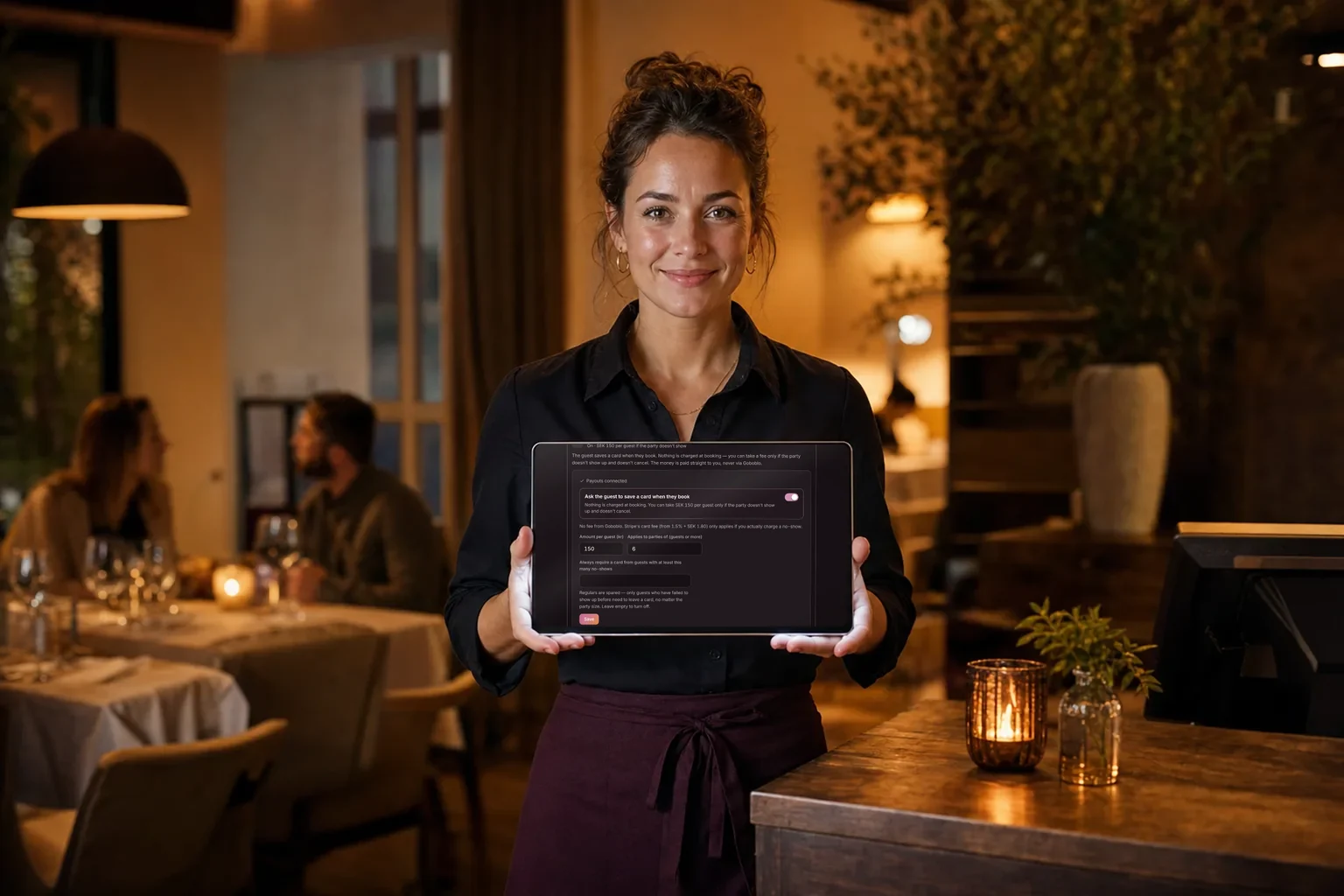
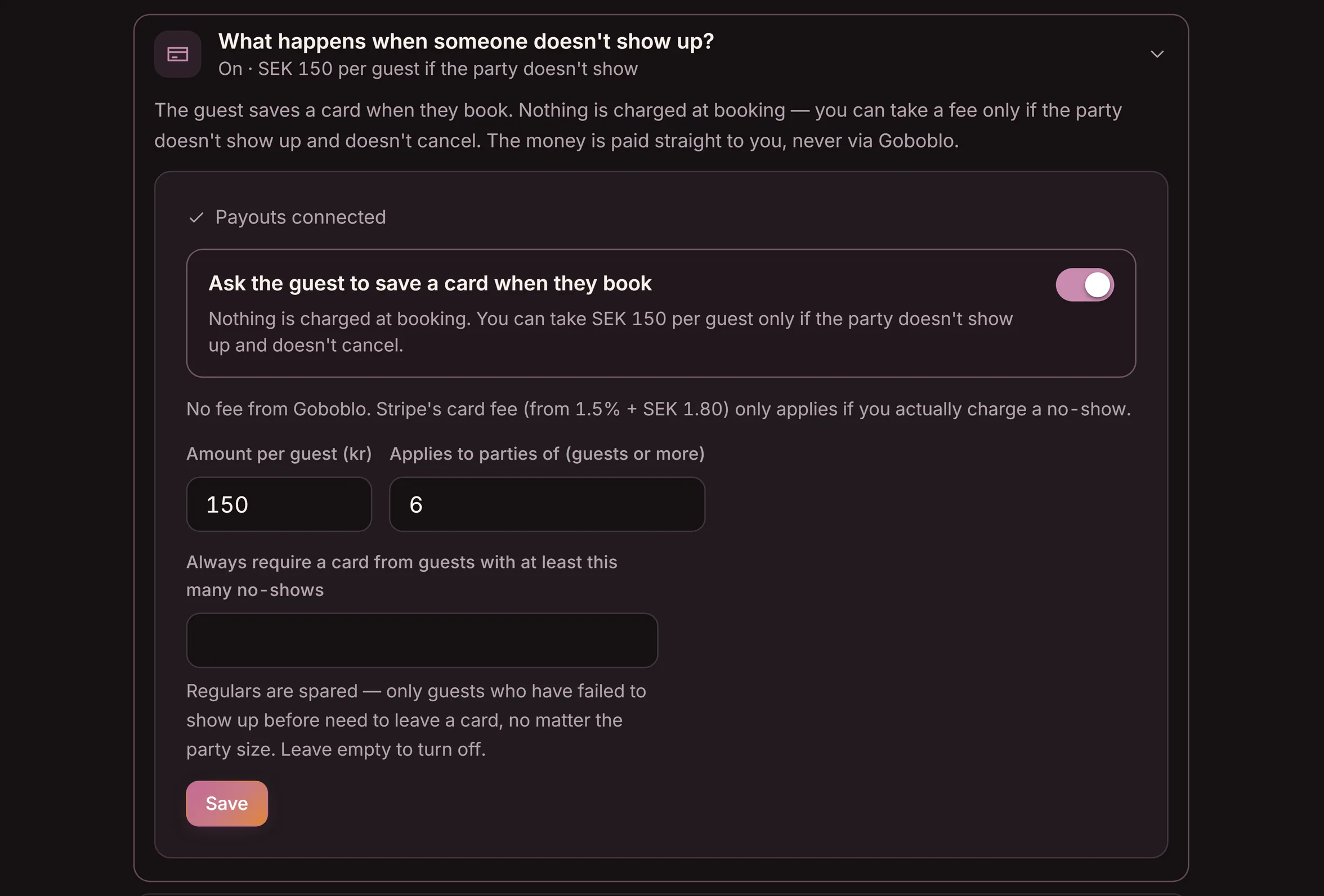
No-shows drop with a confirmation, a reminder, and a manage link the guest can tap in seconds. A cover-fee system still earns on the booking whether the guest shows or ghosts, while you swallow the empty table. Goboblo scores missed covers against each guest profile, warns you before a risky booking — and has a card cover aimed at large parties and repeat no-showers: nothing charged at booking, a per-guest fee only if the party no-shows without cancelling.
- Automatic confirmation and reminder over email or text
- Missed covers scored against each guest profile
- Card cover for the risk bookings · waitlist fills late cancellations
When does a marketplace beat Goboblo?
A marketplace earns its place when most of your tables arrive through its consumer app. Build your own traffic through your site, Google, and regulars, and the flat model wins.
- Reach through a large consumer diner app
- Commission per cover, regulars included
- Guest data stays with the platform
- Strong on discovery, not on owning the guest
- Booking, floor plan, and waitlist in one flow
- 0 commission on your own bookings, flat fee
- Guest profiles with history and tags, yours
- Loyalty and lunch on the same profile
One system, flat price
What operators ask
What does a restaurant booking system cost?
A restaurant booking system bills either a flat fee or a fee per seated cover. Goboblo's booking is $29 a month, and the price is locked for life — it goes up for new customers, not for you. You pay 0 commission on your own bookings. ResDiary, the cheapest fixed UK rival, starts around £99 a month; OpenTable runs about £299 a month plus roughly £2 per cover; TheFork charges commission per cover. The lunch card is free until 150 guests use it, and every guest who uses the card keeps counting — the number only grows. The first month is free — see Goboblo pricing. See also how Goboblo compares to TheFork.
Do I need both a booking system and a marketplace?
No, though many restaurants run both. The booking system is the tool you touch every shift: your floor plan, your guest profiles, your waitlist, your reminders. A marketplace like OpenTable also pushes diners your way for a fee. Want reach you can't build yourself, add one. Fill your own room, and the system alone does the job.
How does a booking system reduce no-shows?
A booking system cuts no-shows with a confirmation, an automatic reminder over email or text, and a one-tap manage link. Goboblo also scores missed covers against each guest profile and fills late cancellations from the waitlist. To go further there's the card cover: the guest saves a card at booking, nothing is charged, and a per-guest fee applies only on a no-show — aimed at large parties and repeat no-showers. Read how to reduce restaurant no-shows step by step.
What is the best booking system for a small restaurant?
For an independent or small group, Goboblo returns the most, because it skips the cover fee and turns first visits into regulars with a built-in restaurant loyalty program. A flat fee means a sold-out Friday costs exactly what a quiet Tuesday does.
Is Goboblo a good OpenTable alternative?
Goboblo suits an independent that wants to own its guest data and skip the per-cover fee, with booking, loyalty, and lunch on one guest profile. OpenTable wins on raw diner-network reach. The full reach-versus-fee trade sits in our OpenTable alternatives breakdown.
Rank by where your covers come from. If a consumer app fills most of your tables, a network-led tool can still win — see the full picture on restaurant reservation software, then weigh Goboblo's pricing against your real cover count.
See whether Goboblo is the best booking system for your restaurant
Book a short demo and we'll walk through booking, floor plan, waitlist, and no-show tools in a real service flow — and what a flat fee means for the covers you fill yourself.